
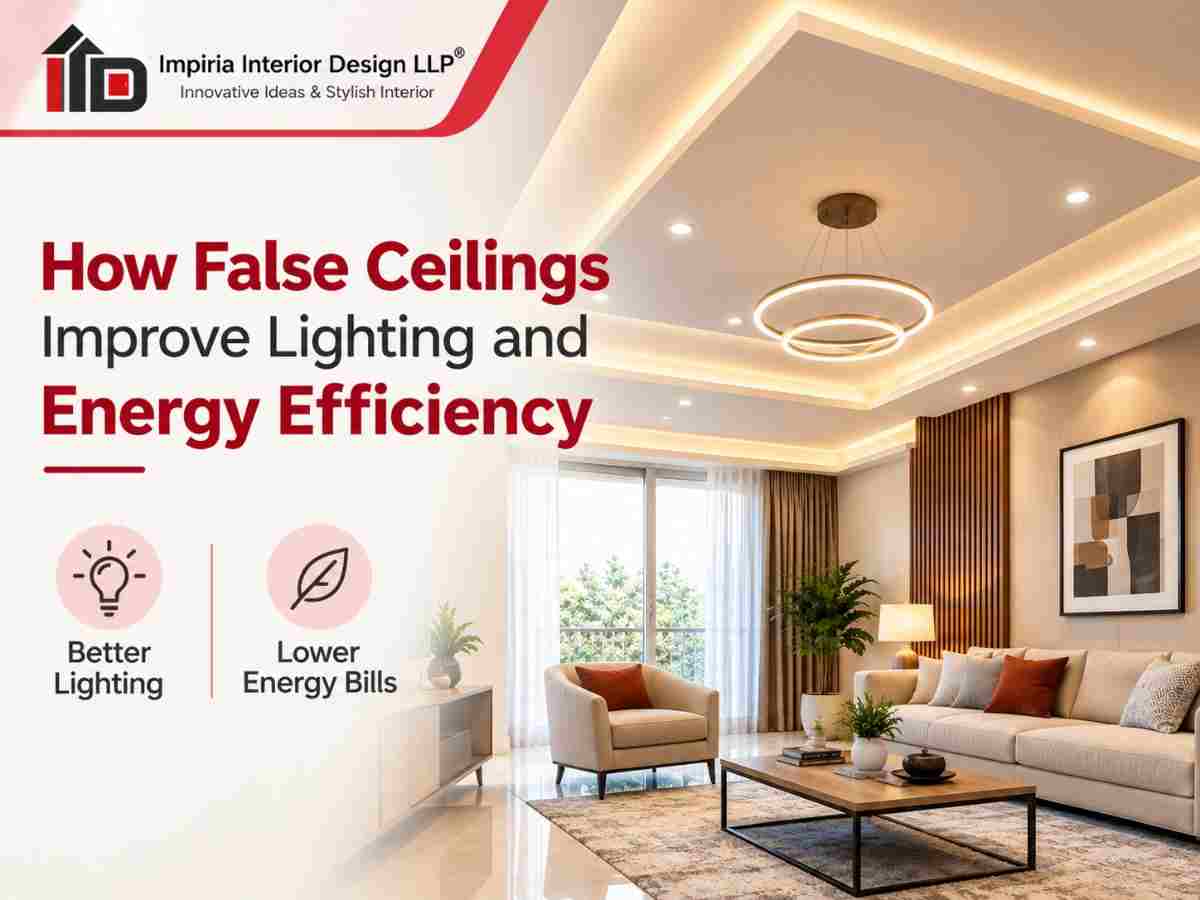
How False Ceilings Improve Lighting and Energy Efficiency

Interior spaces have undergone a drastic transformation in recent years, with homeowners or commercial property owners focusing on striking a balance between functionality and aesthetics. When you walk into a cafe, retail showroom, contemporary office, or even a hospital wing these days, you will most likely witness a unique design feature: false ceilings and the ambience they create.
While false ceilings definitely elevate the overall appearance of the interior space, they also address multiple architectural and interior design issues. This is why more property owners are turning to an experienced false ceiling interior designer in Kolkata to conceal cluttered HVAC ductwork or electrical wiring and help maximise the lighting of the space, thus reducing your energy bills. In this blog, we will learn about the perks of designing false ceilings and how they ensure smarter and more energy-efficient interiors.
From Luxury to Necessity: The Evolution of False Ceilings
False ceilings were initially considered a luxury feature in buildings and apartments, and were mostly seen in hotel rooms or high-end commercial establishments where design budgets could accommodate the extra layer of construction. However, today these suspended ceilings and the lighting around them have become a staple of a majority of today’s commercial and home interiors. The lightweight structure installed beneath the main ceiling creates an aesthetic appeal as it enhances the lighting of your interior, while adding some depth and dimension to otherwise flat, monotonous spaces.
This shift from exclusivity to everyday use didn’t happen overnight. Reducing material costs, wider availability of gypsum board and PVC panels, and a growing number of skilled local contractors made false ceilings far more accessible than they once were. What was once reserved for five-star hotels and premium boutiques is now a common sight in mid-range apartments, neighbourhood cafes, co-working spaces, and even schools and clinics. More importantly, the perception around false ceilings has changed — they are no longer viewed as a decorative add-on, but as a practical investment that solves real problems like wiring concealment, better lighting distribution, and lower energy bills.
How False Ceilings Improve Lighting
One of the biggest advantages of false ceilings is how dramatically they transform the ceiling lighting design and a room’s overall lighting. Instead of relying on a single central fixture, false ceilings allow for recessed and cove lighting to be built directly into the structure, spreading illumination evenly across the space. This reduces harsh shadows and highlights, creating a softer, more comfortable ambience.
What’s more, a professional false ceiling interior designer in Kolkata may also use false ceilings to layer lighting by combining ambient, task, and accent lights, giving spaces far more depth than a flat ceiling ever could. Light-coloured ceiling materials add another benefit: they reflect and bounce light further into the room, meaning fewer fixtures are needed to achieve the same brightness.
How False Ceilings Boost Energy Efficiency
Beyond aesthetics, false ceilings play a powerful role in cutting down on energy costs. The air gap between the false ceiling and the original slab acts as a natural insulating buffer, reducing heat gain in summer and heat loss in winter. This also reduces the hard work your HVAC system must do, thereby directly lowering electricity bills.
False ceilings are also ideal for integrating LED and other low-wattage fixtures, which consume significantly less power than traditional lighting. Combined with better light distribution, this often means fewer bulbs are needed overall – such small changes can add up to meaningful savings over time. For commercial spaces especially, false ceilings make it easy for property owners to control lights and AC by zone, ensuring you are not cooling or lighting rooms that aren’t in use.
What to Keep in Mind Before Installing
While the benefits are clear, a few practical factors are worth considering before the final installation. False ceilings do reduce overall ceiling height, so they may not be a suitable option for compact spaces. Besides, there is an upfront cost involved in false ceiling installation, though this will usually be balanced out or even outweighed by long-term energy savings.
Furthermore, material choice matters too; for example, in a humid city like Kolkata, moisture-resistant materials such as PVC or treated gypsum tend to perform better than standard options. This is where working with an experienced false ceiling interior designer in Kolkata makes a real difference, as they can recommend the right materials and lighting layout suited to your space and local climate.
Conclusion
False ceilings have come a long way from being a luxury reserved for five-star hotels. Today, they have become a smart and functional upgrade that enhances both the look and efficiency of a space. These are designed to improve the lighting quality of a space while quietly reducing your energy bills. Whether you are renovating a home, a cafe, or an office, a well-designed false ceiling can make your interiors feel brighter, more spacious, and more energy-conscious. So, if you are planning your next renovation, consult a professional interior designer who can help you get the layout, lighting, and materials right from the start.